Why Moss Grows On One Side Of Your Roof (And How To Treat It)
Wondering why moss only grows on one side of your roof? Learn what causes it, how to remove it safely, and how to treat your roof so the moss doesn’t come right back.
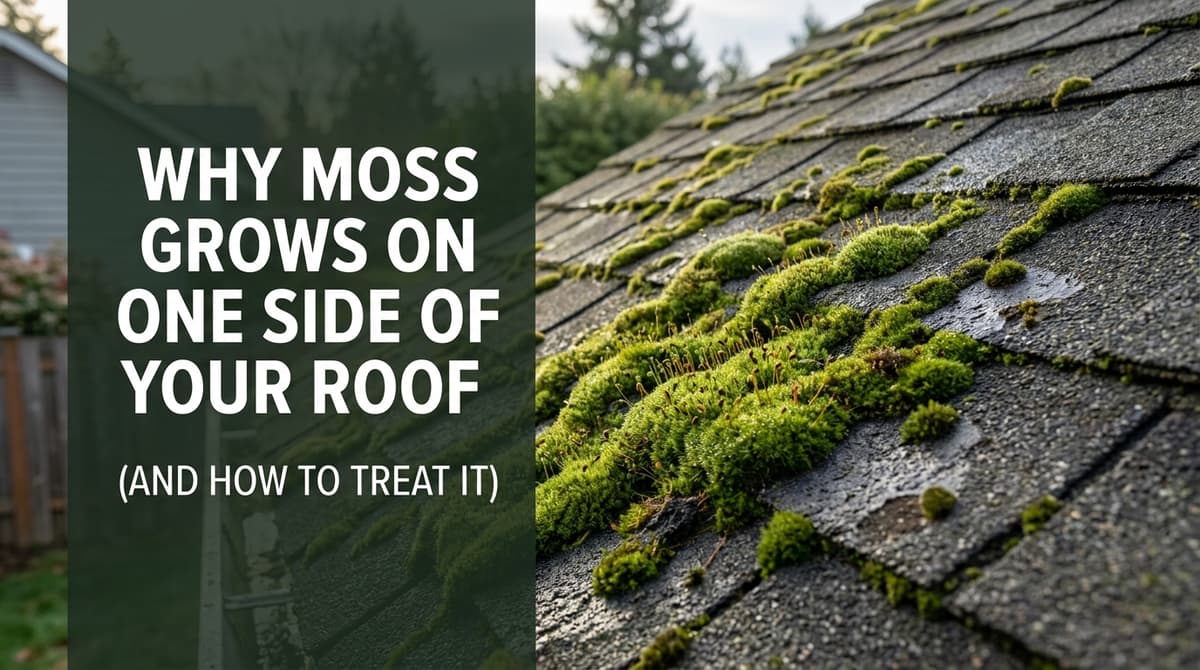
Why Moss Only Grows On One Side Of Your Roof
We recently got a call from a homeowner — let’s call him Mike — who had a really common question about his roof. Mike’s two-story home was about 40 by 40 feet, and he had heavy moss growth on just one side of the roof. The other side looked almost clean.
Mike told us he’d recently moved to our rainy coastal climate, and he was seeing moss on the north-facing side, while the south side looked fine. His insurance company was even pushing him to clean it up and send in photos before a deadline. On top of that, the roof was fairly steep, so climbing up there himself wasn’t a safe option.
That conversation is one we have a lot, and it’s a great springboard to talk about why moss chooses one side of your roof and the right, safe way to remove and treat it so it doesn’t come right back.
The Real Reason Moss Favors One Side Of Your Roof
When Mike described his roof — mossy on the north side, almost clear on the south — we knew exactly what was going on. We actually see this more often than not.
Here’s why it happens:
- Sunlight exposure: In our part of the world, the north side of a roof tends to get the least direct sunlight. Less sun means the roof stays damp longer after rain or fog.
- Moisture and shade: If you’ve got nearby trees, a tall neighboring building, or you’re in a coastal, humid, or forested area, those shaded, damp areas become perfect moss habitat.
- Cooler surface temperatures: Cooler, damp shingles on one side can stay wet for hours longer than the sunnier side, giving moss and algae a head start.
So it’s not that moss “likes” one particular side for no reason. It’s responding to light, moisture, and temperature. The side that dries out slower is the side that ends up with a moss carpet.
Why Scraping Moss Off Isn’t Enough
Mike mentioned he’d thought about grabbing a ladder and scraping the moss off, but the steep pitch and his age made him think twice. Honestly, even for younger homeowners with good balance, that’s a risk we don’t recommend taking.
There are two big problems with DIY scraping or pressure washing moss:
- Shingle damage: Aggressive scrubbing or blasting with a pressure washer strips away the protective granules on asphalt shingles. That can void warranties and shorten the life of your roof.
- Moss regrowth: Even if you knock the moss off, you’re often leaving behind tiny roots and spores. Without a proper treatment, it usually starts coming back within a season or two.
We told Mike the same thing we tell every homeowner: it’s pointless to do removal without doing a treatment. You’ll just end up right back where you started, sometimes with a more fragile roof.
How We Safely Remove Moss From Steep, Two-Story Roofs
Because Mike’s roof had a fairly steep pitch and he was on a two-story home, safety and technique were our top priorities. This is the basic process we walk homeowners through:
- Inspection and photos: We look at the entire roof, not just the “bad” side — checking for damaged shingles, soft spots, and gutter issues. For folks working with insurance companies, we also take before photos.
- Gentle physical removal: On heavy growth, we’ll carefully dislodge the bulk of the moss using soft methods (never high-pressure blasting). The goal is to remove weight and allow treatment to reach the surface.
- Soft wash treatment: This is where the long-term magic happens. We use a dedicated soft wash system that blends:
- Sodium hypochlorite (a cleaning agent) at controlled, roof-safe proportions
- A surfactant to help the solution cling and dwell on the moss instead of running right off
- Water to properly dilute and rinse
- Copper granules as a fungicide to slow future moss and algae growth
- Low-pressure rinse: We rinse at low pressure to avoid shingle damage while carrying away dead moss, grime, and residue.
- Final inspection and “after” photos: We confirm everything is clean, gutters are flowing, and provide photos many insurance providers require.
This is a very different approach from what you get with a big-box-store moss granule product tossed on a steep roof, where most of it just ends up in the gutters or yard.
Why A Treatment Plan Matters More Than A Quick Clean
Mike mentioned he’d seen moss granules advertised “for roofs and sidewalks” and wondered if those were enough. We’ve actually used some of those products in the past, like Moss Out, and they can help in certain situations, but they’re rarely a full solution for a pitched, two-story roof.
For long-lasting results, you want to think in terms of a treatment plan, not a one-time scrub:
- Full coverage: Even if moss is only on the north side now, we often treat other vulnerable areas lightly to slow future growth.
- Regular maintenance: In damp climates, a professional roof wash and treatment every few years keeps things under control.
- Gutter cleaning: If moss and debris are clogging your gutters, water can back up under shingles and make regrowth even worse.
We always remind homeowners: removal + treatment + maintenance is the winning combo. Skip one, and you’ll probably be revisiting the problem sooner than you’d like.
Safety And Insurance: Why Hiring A Pro Often Makes Sense
In Mike’s case, his insurance company was already on him about the moss and wanted proof it was taken care of. That’s not unusual — we get a lot of calls where companies threaten to raise rates or drop coverage if roof moss isn’t addressed.
Here’s where a professional can really help:
- Safety on steep, two-story roofs: We’re equipped for steep pitches that really shouldn’t be tackled with a homeowner’s ladder and a bucket.
- Licensed, insured, and bonded: Many insurers want to see that a qualified contractor did the work — not just to check a box, but to know the roof wasn’t damaged in the process.
- Documented results: We provide before-and-after photos so you can send exactly what your insurance company is asking for.
If your insurer is pushing you on a deadline, it can help to let them know you’ve scheduled a professional and share the date you’re on the books. We’ve seen many cases where that’s enough to buy a little breathing room.
When To Call In Help For Moss On Your Roof
If you’re noticing moss build-up on just one side of your roof — especially the shaded, north-facing side — it’s not a freak occurrence. It’s your roof telling you it’s staying damp longer than it should, and moss is simply moving in where the conditions are right.
Whether you’re dealing with a pushy insurance company, a steep two-story roof, or you just want it handled safely and correctly the first time, we’re here to help with gentle, effective moss removal and treatment that protects your roof and keeps it looking good longer.