Full Roof Maintenance - Moss Removal, Treatment, and Gutter Cleaning
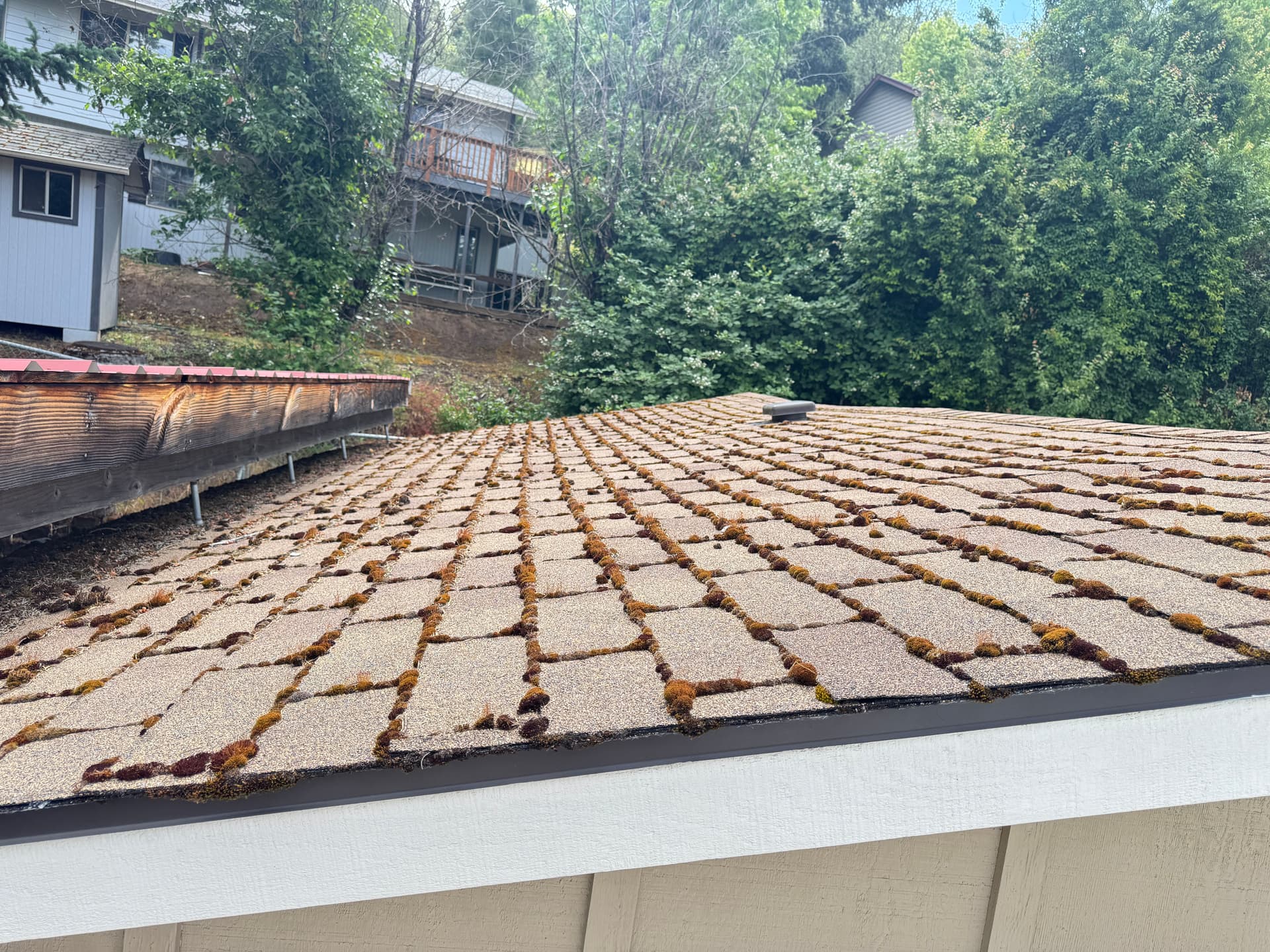
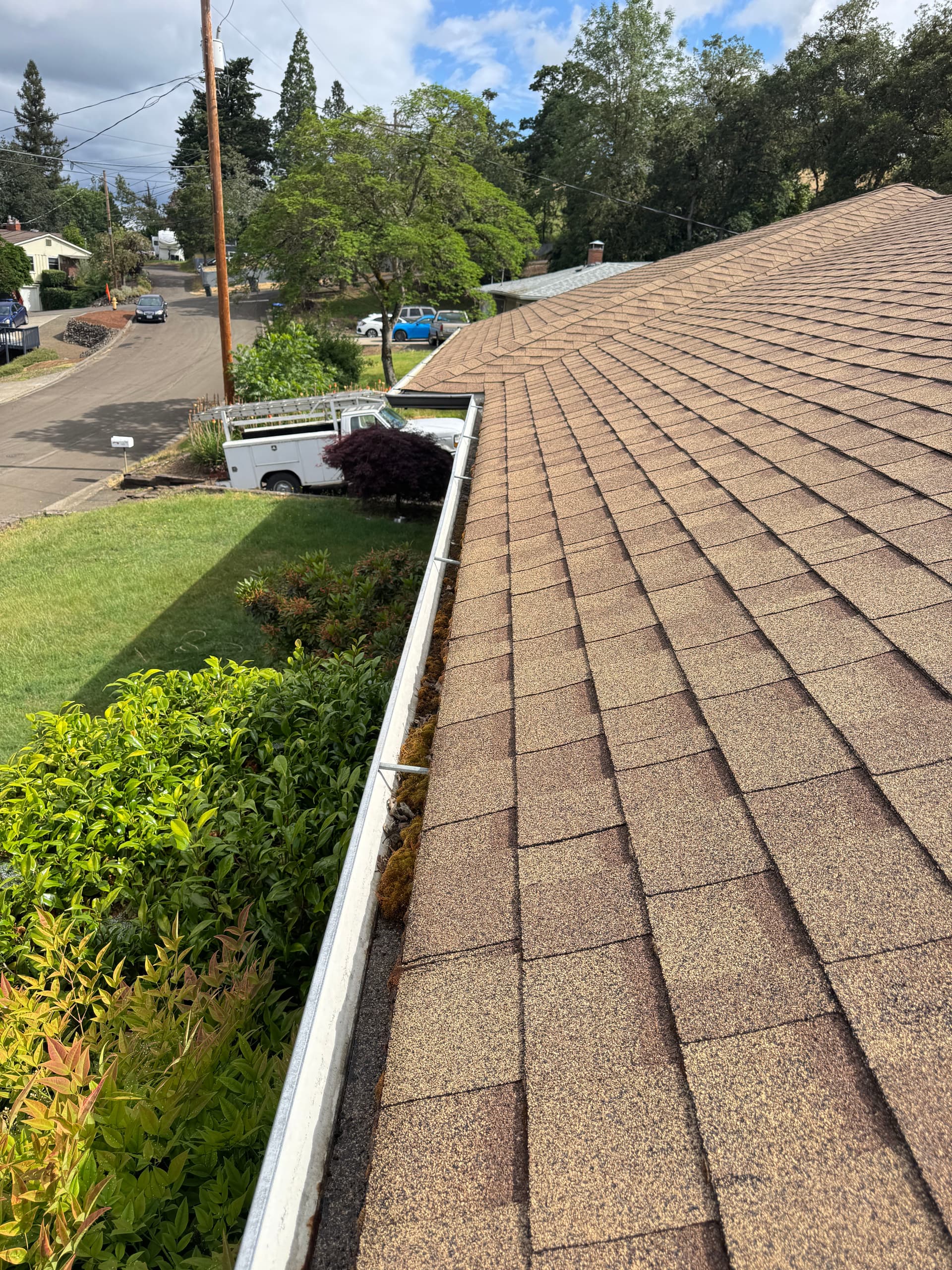
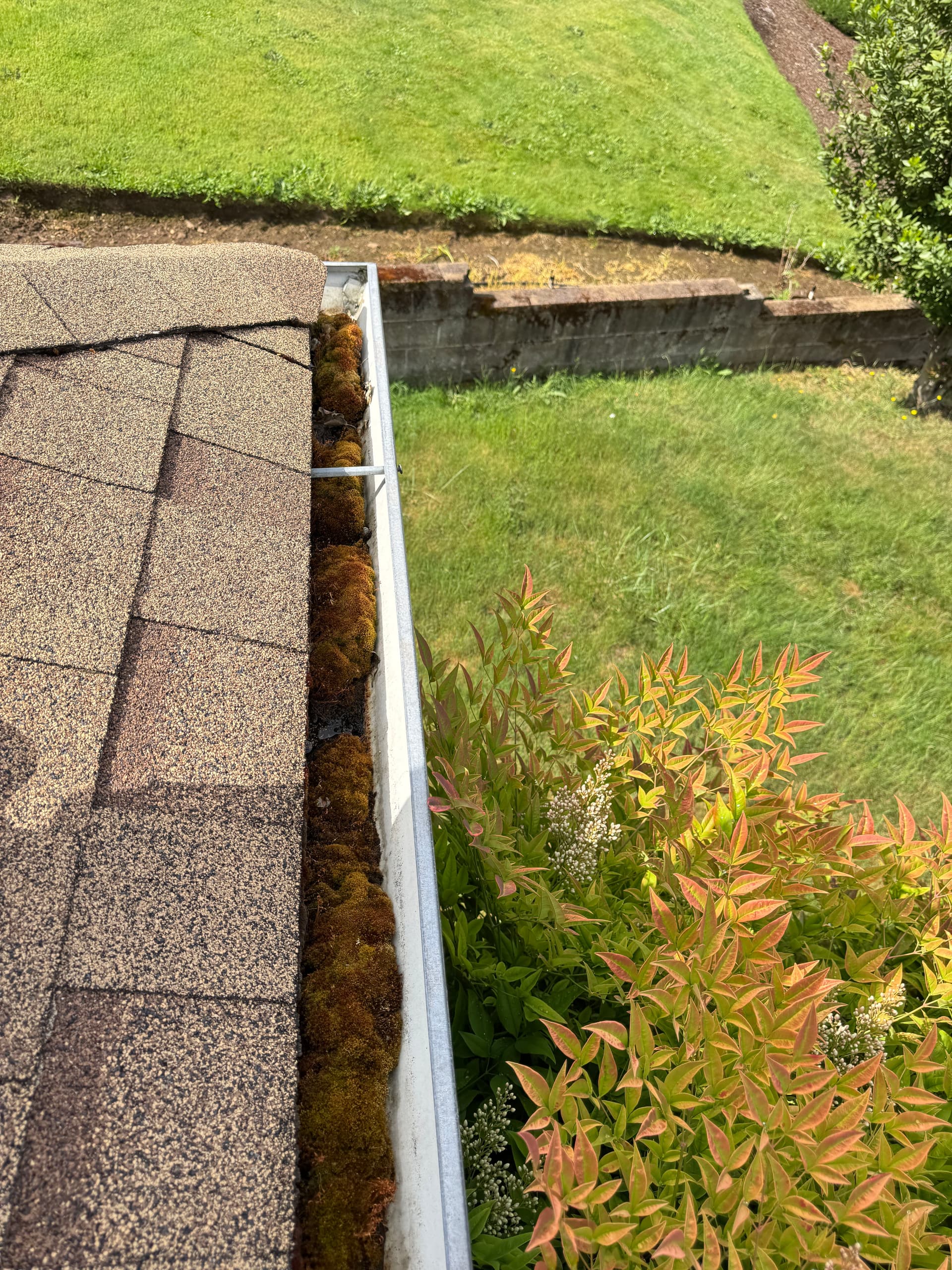
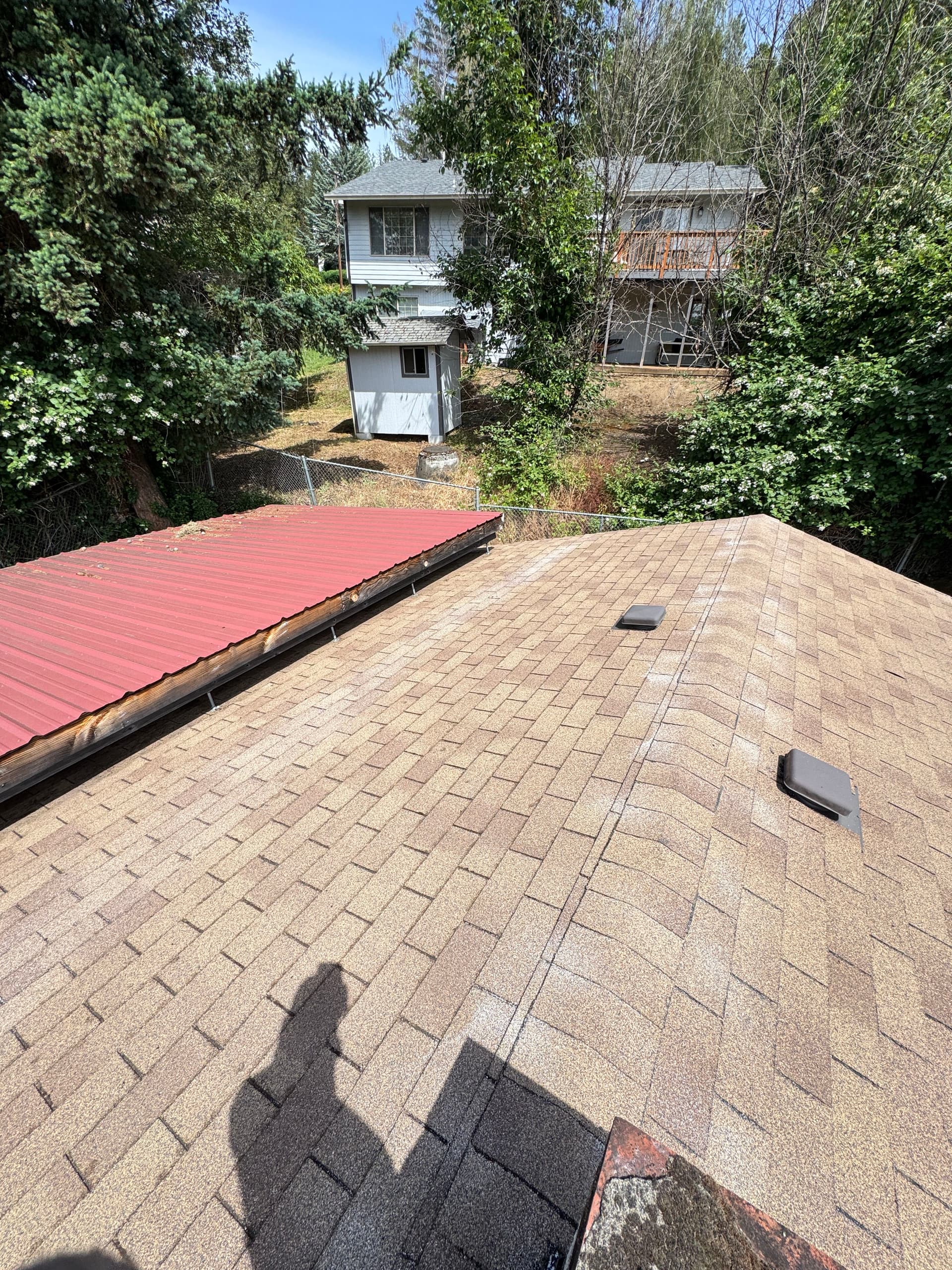
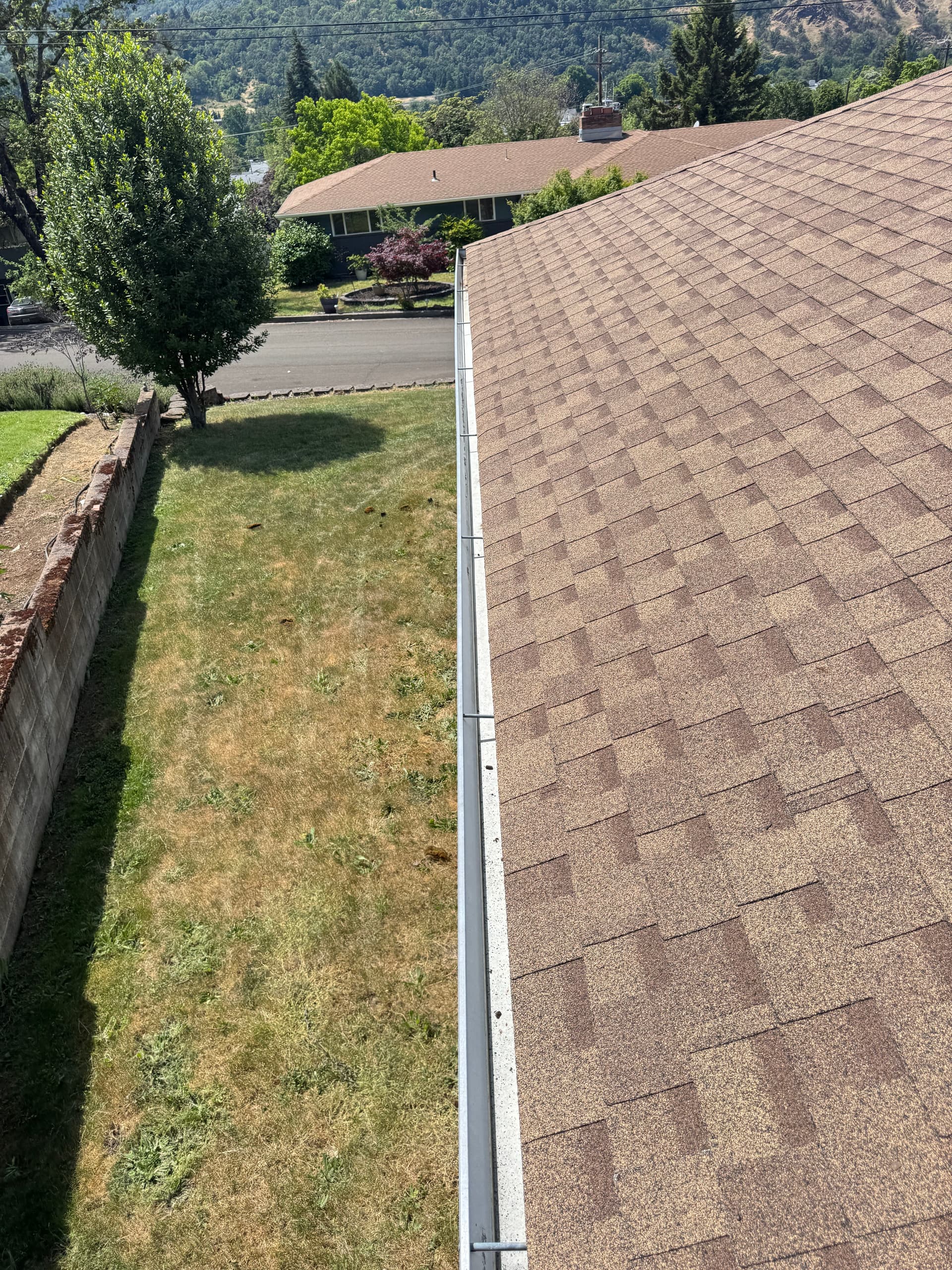
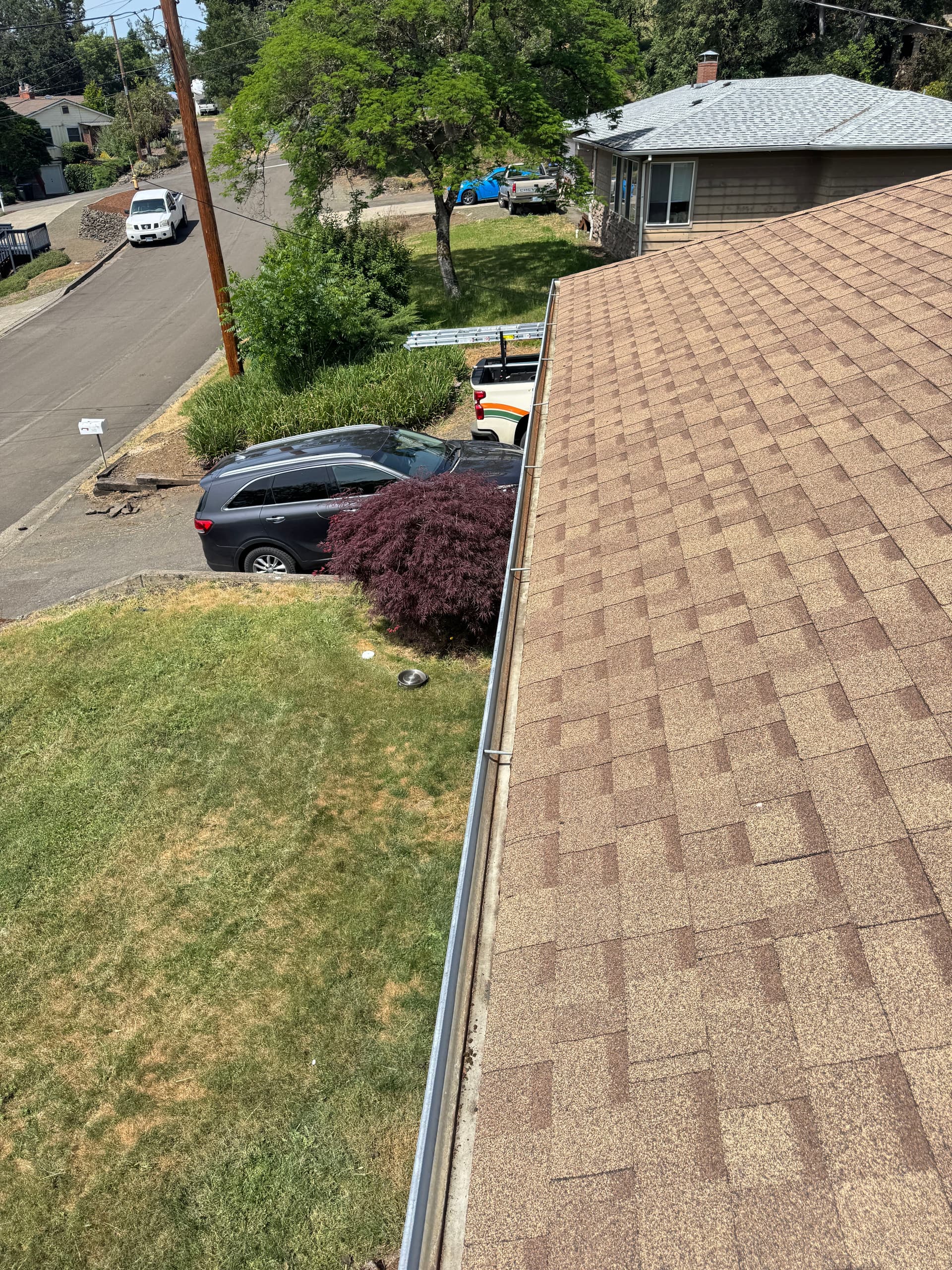
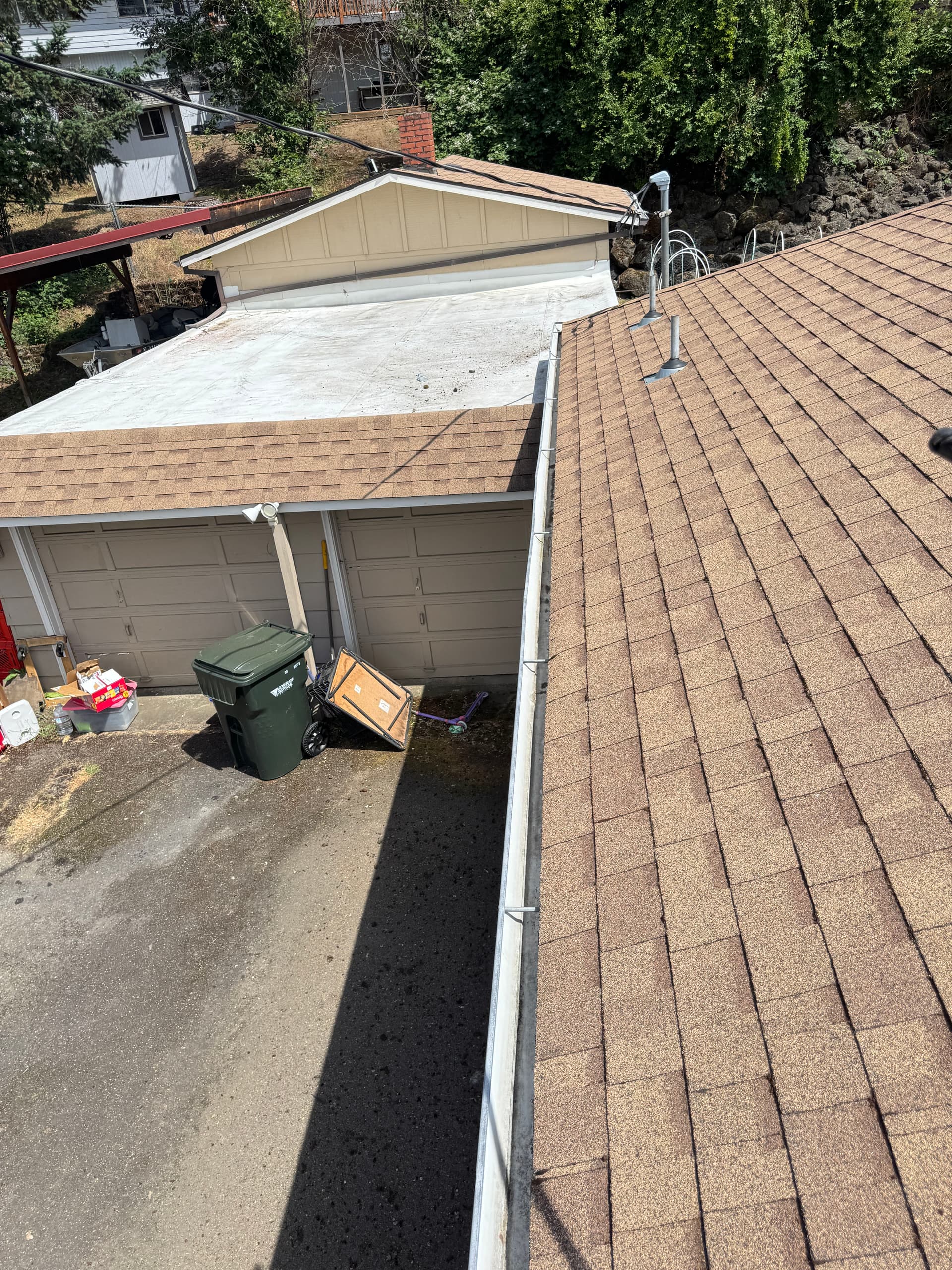
This one had a few things going on at once. The main roof had moss working its way into the shingle lines throughout - not a total takeover, but definitely spreading across multiple sections. The detached structure was worse off, with moss packed in pretty thick. On top of that, the gutters were loaded up and not doing much draining, and the roof vents had staining around them that had been building up for a while.
We started with the moss removal on both structures, clearing everything off the shingles and getting down into the lines where it was starting to take hold. Once the surface was clean, we applied a treatment to slow future growth down - that part matters just as much as the cleaning itself. Moss doesn't stop on its own, so treating after removal is what actually buys you time between jobs.
The gutters were next. Before the cleanout, they were packed with moss and debris to the point where water had nowhere to go. Clogged gutters might not seem urgent, but they're one of those things that quietly causes damage - overflow pulls away from fascia, water backs up under shingles, and it compounds over time. Getting them cleared out and flowing again is straightforward work, but it protects a lot more than most people realize.
We also took care of the vent staining while we were up there. It's a small detail that often gets skipped, but cleaning it up made a real difference in how the roof looked overall. When you're already on the roof handling the big stuff, it just makes sense to clean up everything you find along the way.
Jobs like this one don't always look dramatic from the ground - but up close, there's a clear difference between a roof that's been maintained and one that hasn't. Staying ahead of moss and keeping gutters clear is one of the most practical things a homeowner can do to protect the lifespan of their roof.