Roof Moss Removal and Treatment on an Oregon Home
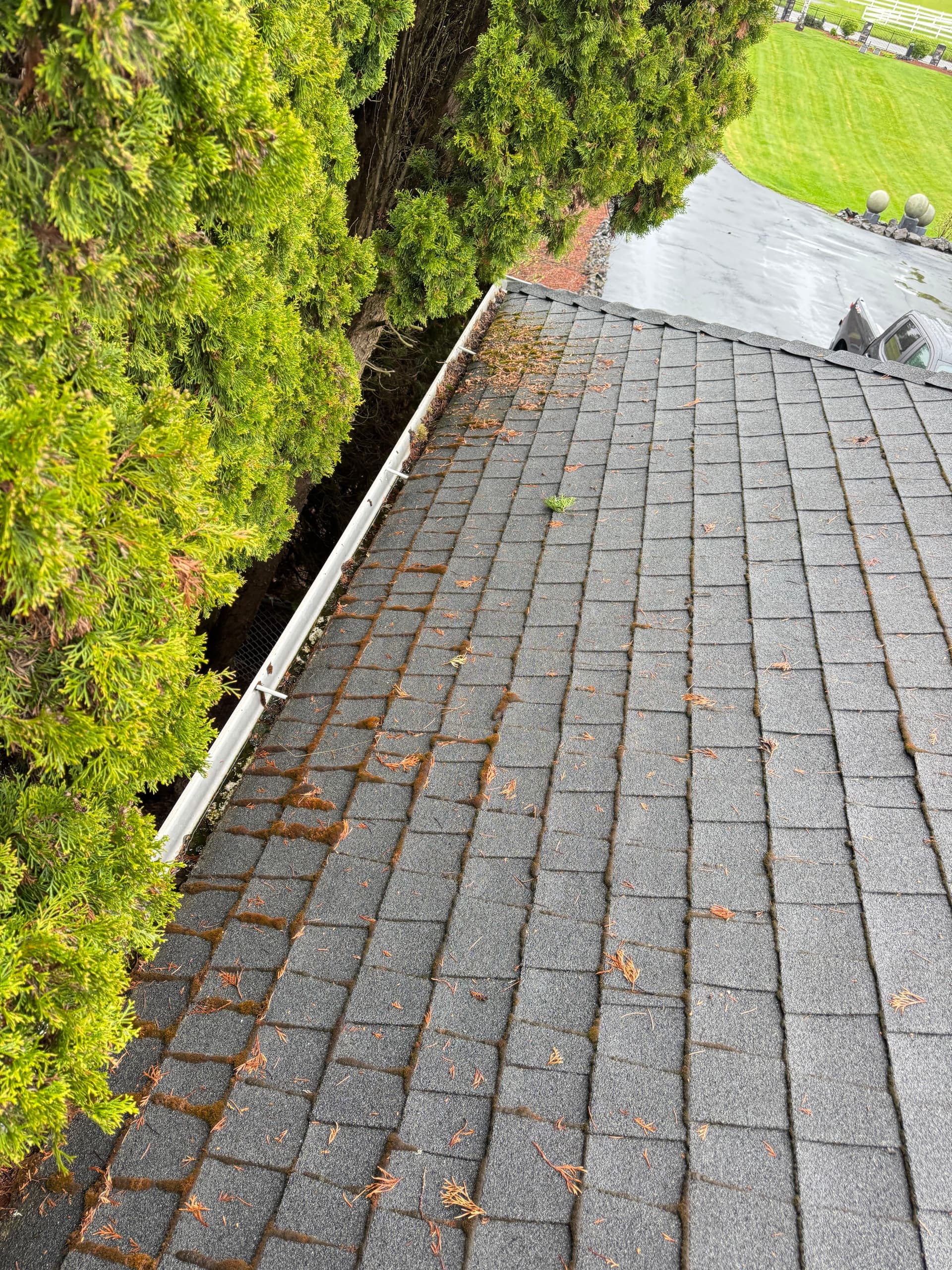
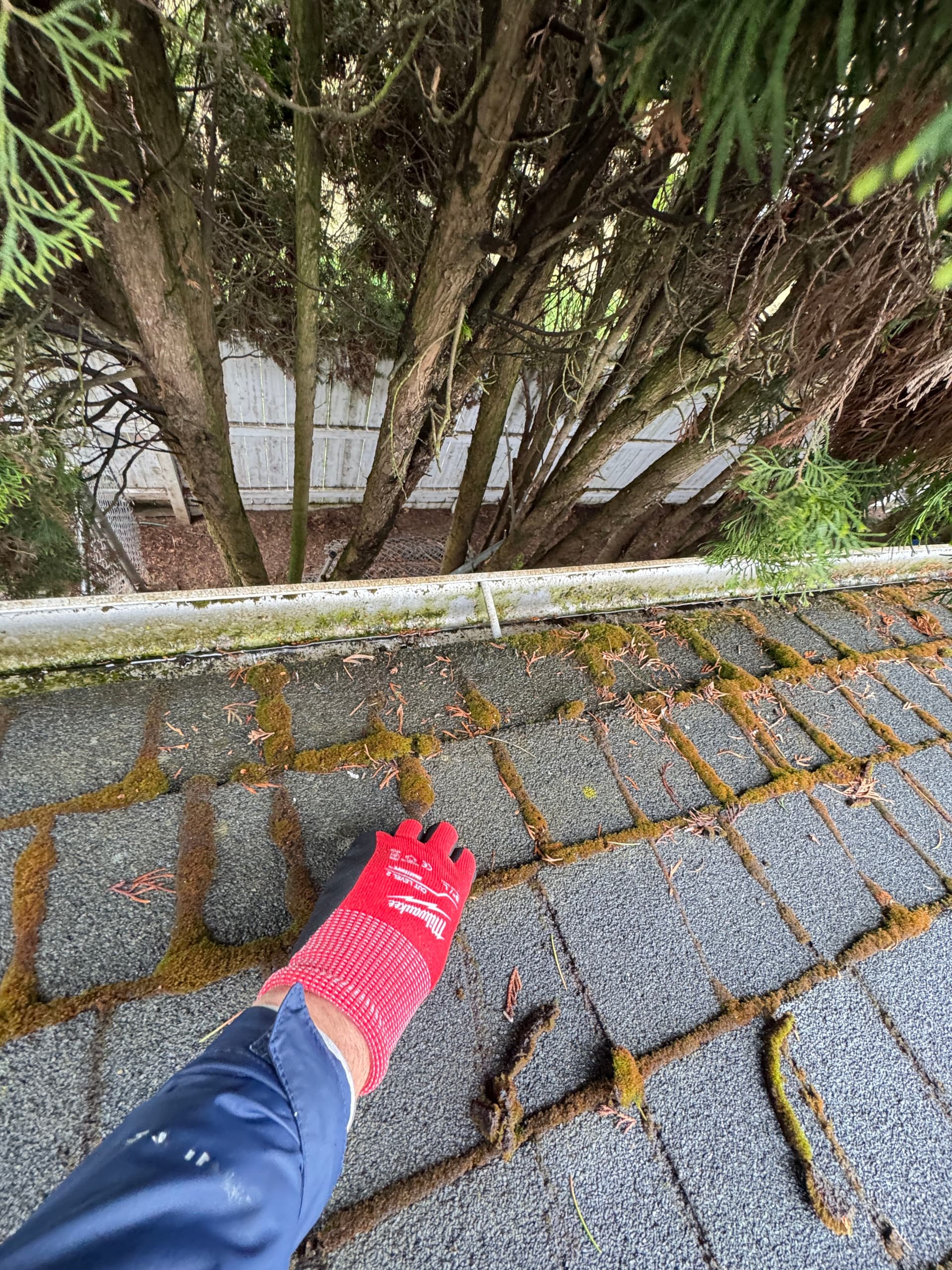
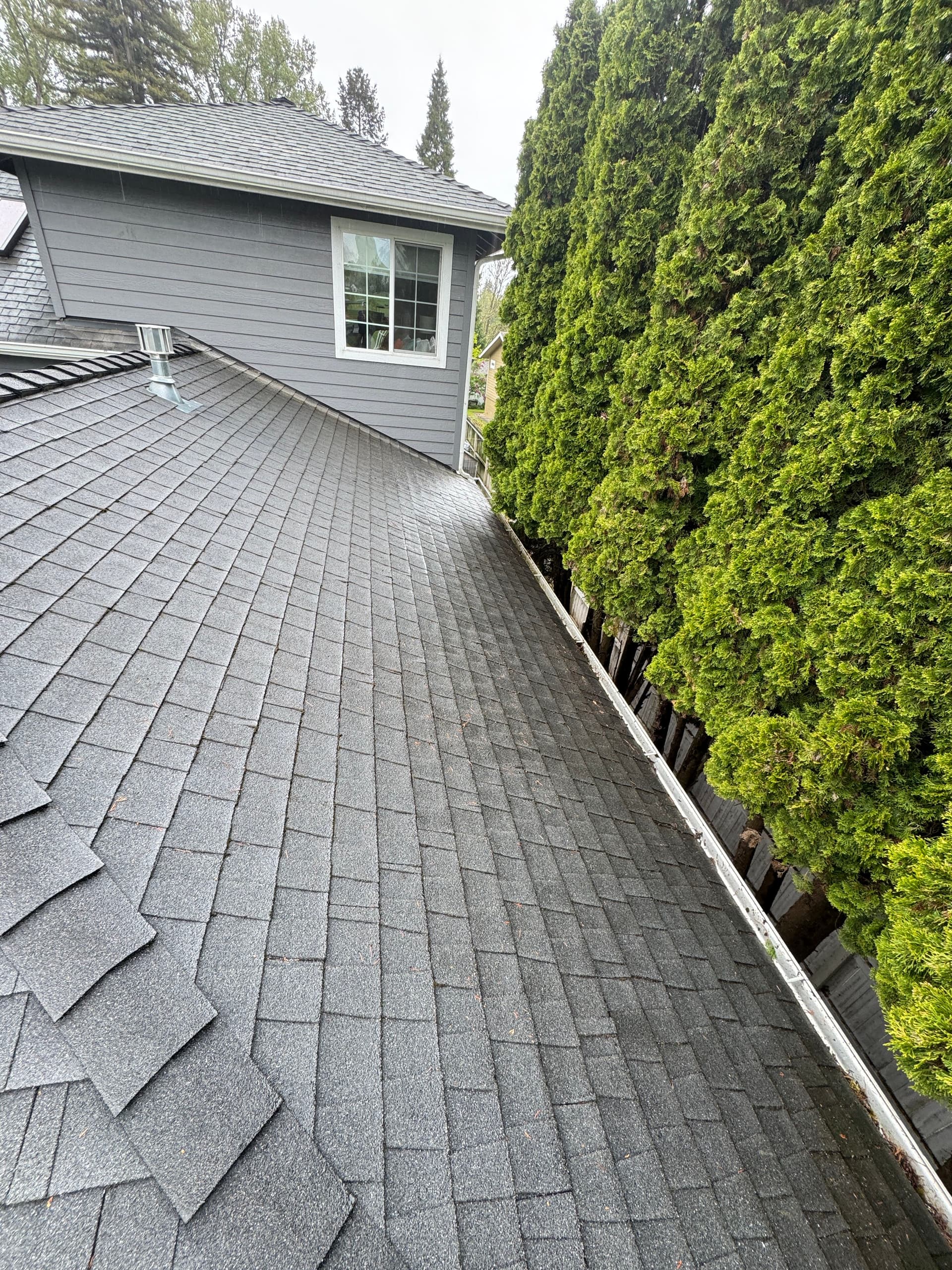
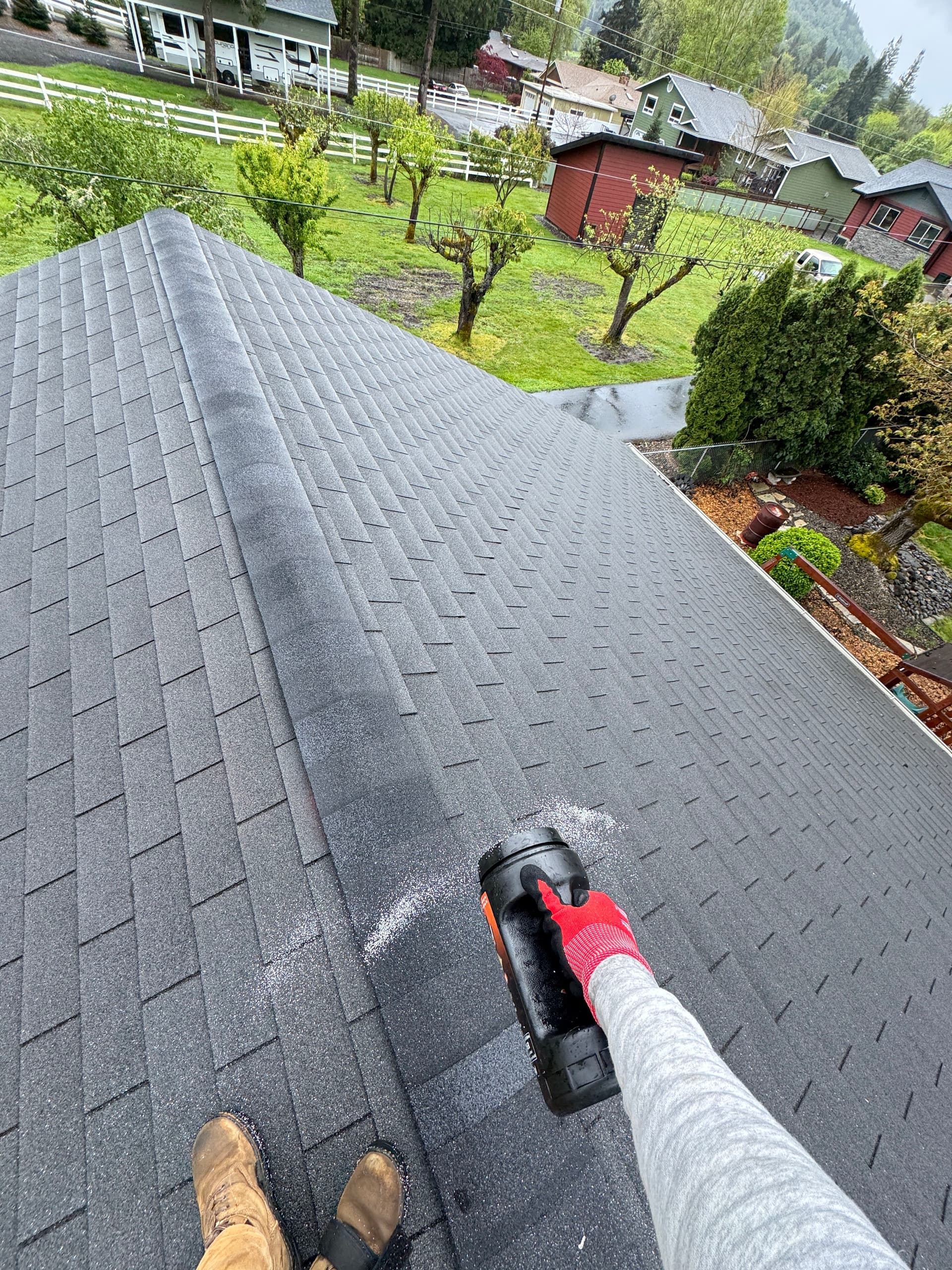
Moss doesn't wait for a convenient time to show up. In Oregon especially, it just quietly takes hold - working its way into the shingle seams, holding moisture against the surface, and slowly breaking down the roof underneath. By the time most homeowners notice it, it's already been there a while. That's exactly what we were dealing with here.
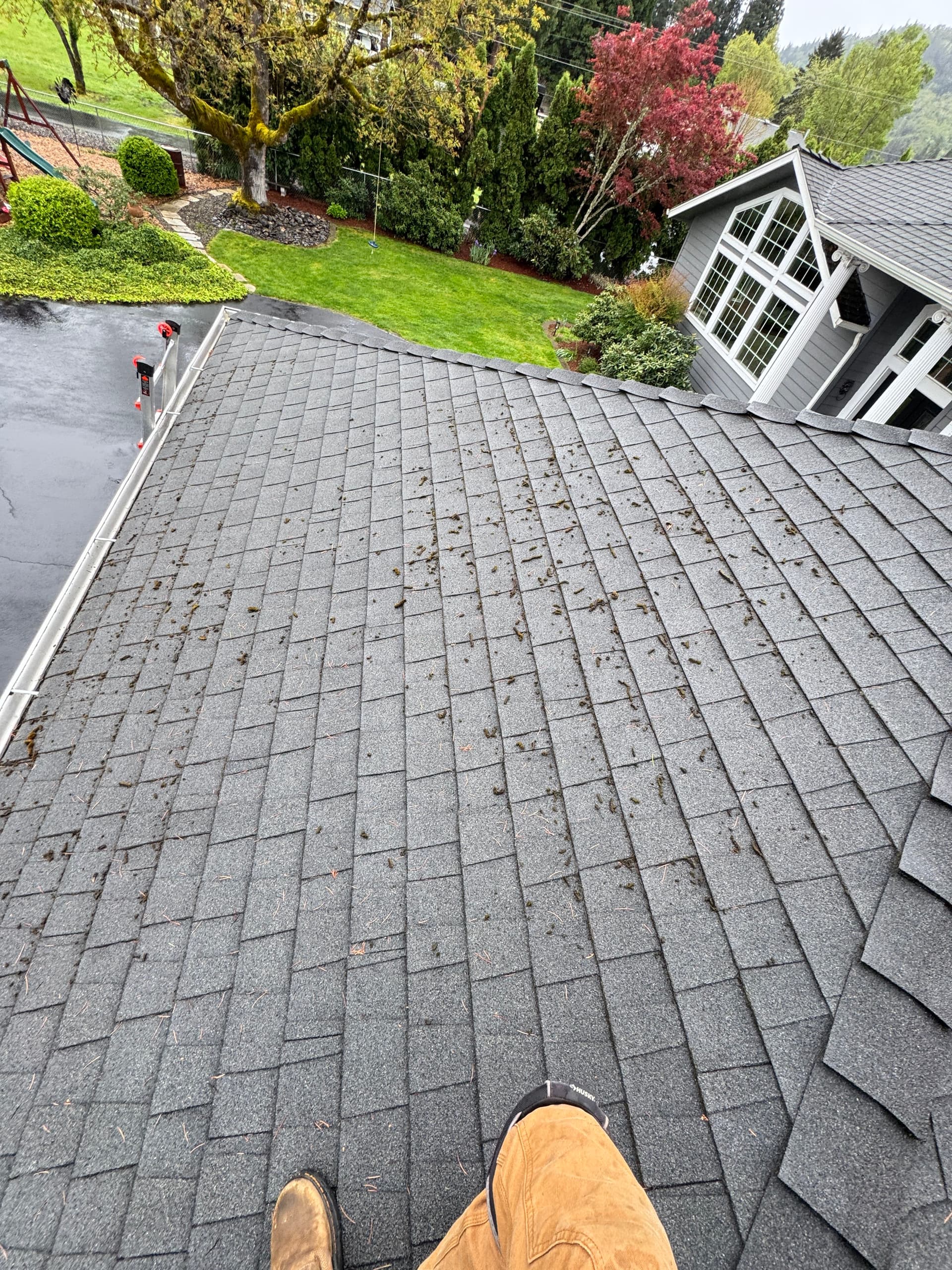
The roof had a solid layer of moss built up, particularly along the edges near the tree line where shade and debris create the perfect conditions for growth. We went through and manually cleared the moss off the shingles - getting into the seams and along the gutters where it tends to pile up the worst. That hands-on removal step matters. It gets the bulk of it off the surface so the treatment that follows actually has direct contact with the shingle.
After the removal, we applied a moss treatment across the whole roof. This is the part that keeps it from coming right back. Removing moss without treating is like pulling weeds without getting the root - it buys you a little time, but not much. The treatment works into the shingle surface and stops regrowth before it gets started again. Oregon weather being what it is, skipping this step just isn't worth it.
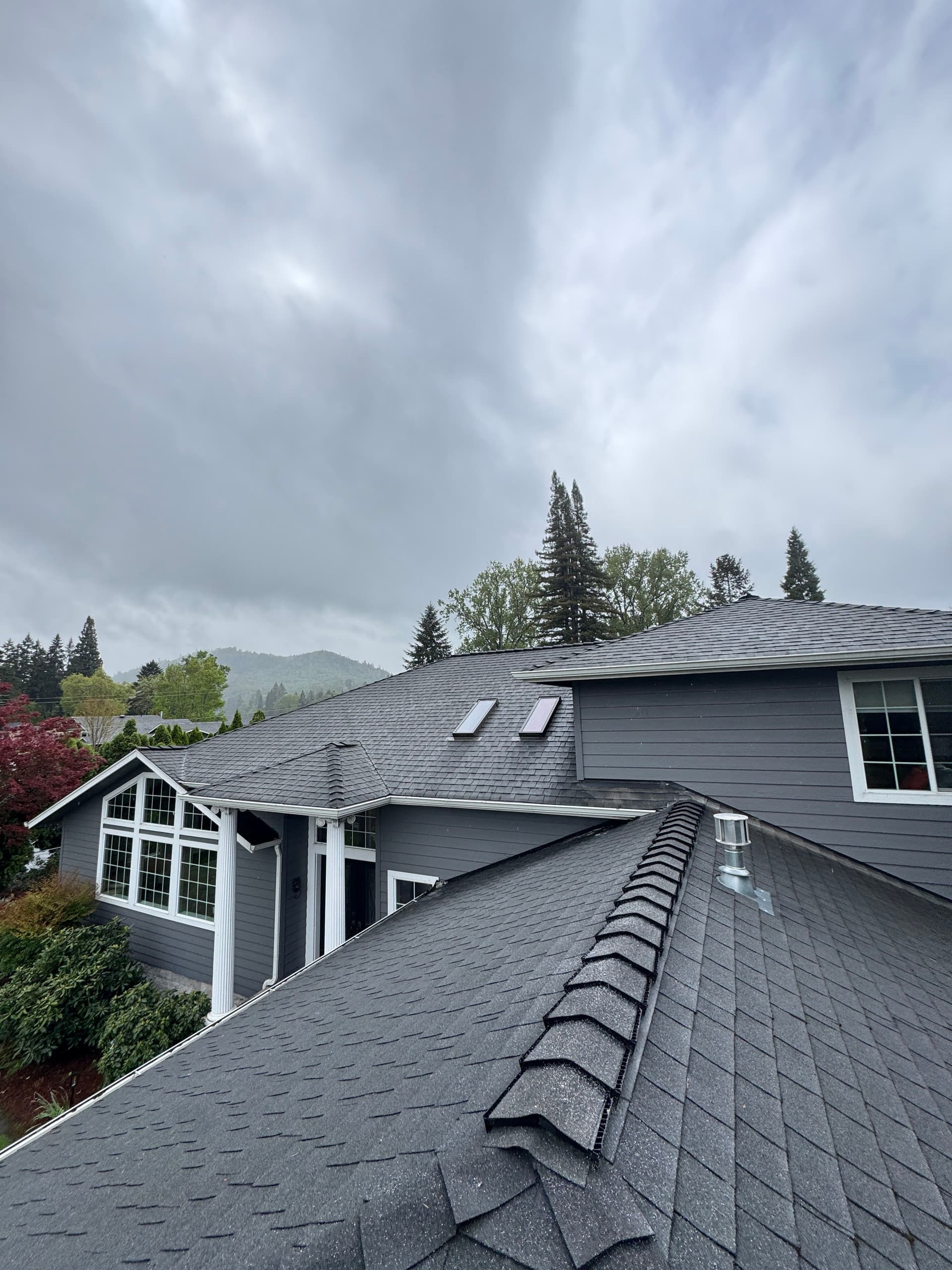
The conditions weren't exactly ideal - sun one minute, rain the next, classic Pacific Northwest. But that's just part of the job out here. We worked through it and wrapped up with a clean, treated roof that looked sharp by the time we were done. The before and after difference on a job like this is always satisfying to see.
If your roof is starting to show that green tint, it's worth getting ahead of it. The longer moss sits, the more damage it does - and catching it early is always cheaper than dealing with what comes after you ignore it.